Posts

Bushy Park Nature Diary - Summer

Image
Well, summer is nearly over and I’ve once again come to the conclusion that I’m not very good at keeping a regular blog! With the onset of autumn I need to make a renewed effort to explore and share the world around me, so consider this the first step… The summer of Covid-19 has been an unusual one, but there have also been a lot of opportunities for self-reflection, insight and discovery. I’m heartened by the number of people who have used this time as an opportunity to reconnect with their local area and the wildlife in it, even if a few people seem to have reconnected with their local open spaces by setting them on fire. Everyone has been trying to guess at what “The New Normal” will look like. I’m not going to do that because, as with everything around Covid-19, I don’t think anything is certain. I do have a lot of hope though that with a renewed interest in the natural world, more people will be spending time in nature, and hopefully doing so responsibly. So what have I discov...

Bushy Park Nature Diary - April

Image
Even having lived next to it for nearly nine years, this month I think I’ve really come to know and to appreciate the park. Only being allowed one daily exercise walk has made the time spent in there a little island of sanity in a world gone mad. And the park keeps giving back in terms of wildlife. April is the time of year when the trees start coming to life, the flowers begin to grow and a lot of the wildlife that’s been dormant since the previous summer begins to reappear. Slowly but surely the trees are coming into leaf. In early April they’re still sparsely covered in fresh, yellow-green shoots but by the end of the month most of these will be fully unfurled and drinking up the sunlight. Probably my favourite are the oaks, with their delicate flowers hanging down pendulously amongst the sprays of leaves. This is the tree that I have the most to do with because I volunteer for the park as an Oak Processionary Moth surveyor; I’ll talk more about that in a future entry because ...

Bushy Park Nature Diary - March

So last month’s diary was a weird one because of all the heavy rain and storms making it hard to get out and about in the park. I was looking forward to March because it marks the beginning of Spring and those first days of brightness and warmth. Well for the first week it wasn’t too bad, and I ended up taking a trip down to Frensham Common in the sunshine to look for a Great Grey Shrike. I found it, with quite a bit of help from the birders who already knew where to look, but as we were looking at the bird there was a slight hint of worry running through the group. Should we be standing so close to each other? Fast forward to now and the answer is no, we shouldn’t. The novel Coronavirus has disrupted every part of daily life, up to and including the time we are able to spend outside, and now the time I spend in the park is incredibly precious. I can’t really complain too much – the lockdown rules are there to protect the most vulnerable in society and stop the health service fro...

Bushy Park Nature Diary - February

Image
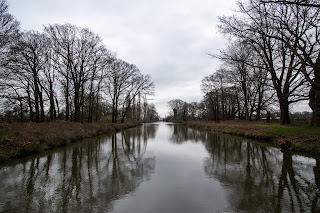
The original plan was that this entry would be all about finding those first signs of the on-coming Spring. Well winter, if you could call it winter, has had other ideas, and the theme in Bushy Park this month has been storms. And lots of them! The park is currently saturated with water, with pools and puddles dotted everywhere on our side of the park, and branches and trees blown everywhere. It’s been so bad that Royal Parks decided to close the park when Storm Ciara came through, probably a wise idea given the number of tall trees in there. In between the howling winds there have been calm periods though, and I have managed to get in a couple of times to look for wildlife and also to do some astronomy. Usually this time of year is when the crocuses and the daffodils come out in huge stands in the woodland gardens, but I wouldn’t know having not managed to venture in there since January! The Longford River just before Storm Ciara. In fact most of my visits to the park ...

We're Going on an Owl Hunt

Image
Just lately, owls have been In. Long seen as a symbol of wisdom, they’re a bird that are familiar whilst being quite mysterious. Denizens of the night that make unearthly noises and fly soundlessly through the darkness, they are seldom encountered by most people which is a pity because they wonderful birds to watch. Barn Owl quartering at Elmley NNR Owls were originally associated with Athena in Greek myth, the goddess of wisdom, and that’s why they're supposed to be intelligent. Make no mistake, owls are among the stupidest of all the birds – natural selection has produced an animal that’s sole purpose is spotting small moving things, catching them and eating them. Most of their brains are taken up with the visual processing system leaving precious little room for anything else. What makes owls such perfect hunters? Well the eyes are their most striking feature. Huge in relation to the rest of the face and facing entirely forward giving superb binocular vision, they...

Object of the Month - Mercury

Image
Mercury is the forgotten naked eye planet because most people have never seen it. It’s one of the least explored worlds in our solar system but in the few times we have visited, we’ve found out that it’s not a place you'd want to live. We know it’s the closest planet to the sun and it orbits in 88 days while one rotation of the planet on its axis takes 59 days. That day would be quite uncomfortable though. At night the temperature plummets to below -150 o C but during the day it can reach well over 400 o C, which is hot enough to melt lead. There’s no atmosphere either – that got blown off by the fearsome solar winds, and without an atmosphere it has been constantly bombarded by meteors so its surface is heavily cratered. Mercury - Image from NASA Seeing Mercury is difficult, even though it shines brighter than most stars in the sky. Its proximity to the sun means that its light gets drowned out by the twilight glow but every so often it steps out far enough from our per...

Bushy Park Nature Diary - January

Image
As this is the first entry on my blog, I thought I’d kick it off by introducing you to my “Patch.” If you’re not familiar with the term it’s usually used by birders to describe the local area that they frequent on a regular basis and are most familiar with. In many ways I have a couple of patches, but if I had to choose one it would have to be Bushy Park. Looking towards the National Physical Laboratory - there's often a flock of black-headed gulls on here Bushy is one of the Royal Parks, situated in Zone 6 in the Borough of Richmond on Thames, and it is a very special place indeed. I'm lucky enough to live a quick five minute walk from one of the gates but it’s easily accessible from Teddington, Kingston and Hampton. It's the second biggest Royal Park at 445 hectares, and has a mix of habitats ranging from large stands of open grassland to dense scrubby woodlands. Most of the park is a designated SSSI because of the invertebrates lurking in the grasslands. Qu...